
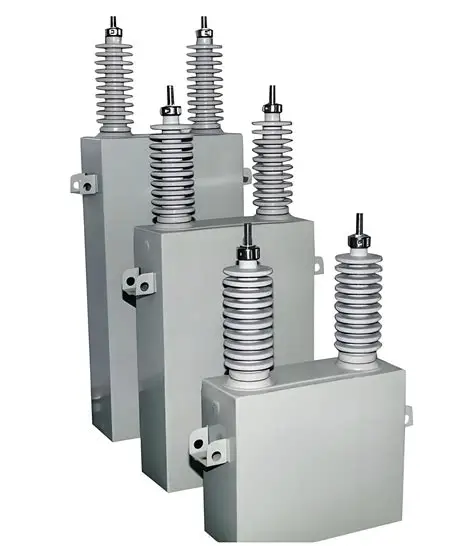
High-voltage capacitors are power devices designed to store, stabilize, and compensate for electrical energy in high-voltage networks. They ensure the proper operation of substations, industrial facilities, reactive power compensation systems, and high-voltage converter stations.
These capacitors are used for:
reactive power compensation and improving the power factor;
voltage stabilization and reducing network fluctuations;
operation in harmonic filters and high-frequency circuits;
pulse generation in high-voltage circuits;
energy conservation and optimization of transformer loads.
Purpose of Capacitors
Improving the energy efficiency of the power grid.
Reducing electricity losses.
Protecting equipment from overloads.
Operation in compensation and filtering circuits.
Generating high-voltage pulses in industrial systems.
Minimum and maximum technical specifications (general ranges)
Voltage class: from 1 kV to 800+ kV
Capacitance: from several nanofarads to tens of microfarads
Types: oil-filled, dry-type, pulse, filter, power, ceramic
Current: from a few amperes to hundreds of amperes
Mounting: external, internal, panel-mounted, modular
Resistance: to high temperatures, UV radiation, contamination, and mechanical stress
Specifications depend on the specific manufacturer, series, and network application.
What We Can Supply and Provide
We supply capacitors of any brand—we select the optimal solution based on the facility’s technical requirements.
We design compensation and filtering circuits, integrating capacitors into high-voltage assemblies.
We perform configuration, installation, and commissioning.
We provide a warranty covering all stages—from equipment selection to commissioning.
BUYER FEEDBACK